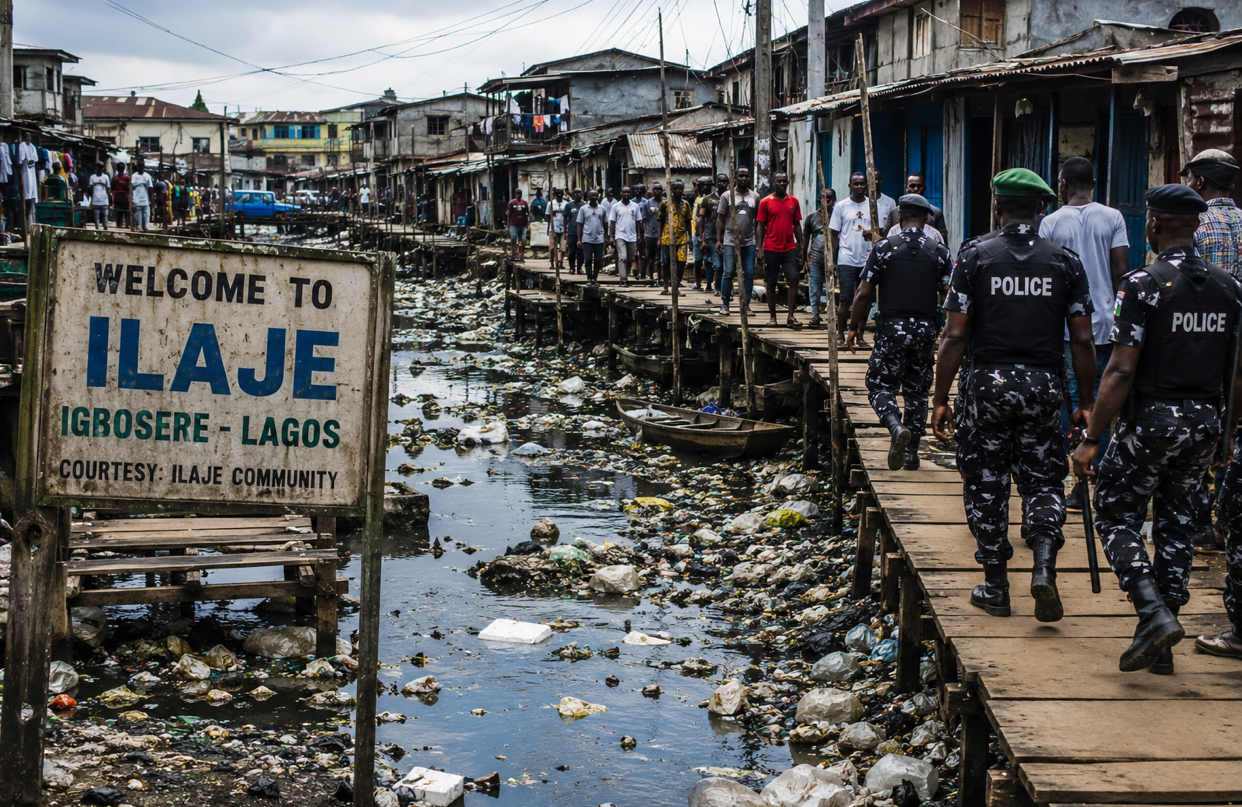

Hidden behind the bustling streets of Lagos lies Ilaje, a densely populated waterfront community where poverty, inadequate infrastructure, and criminal activities have combined to create a persistent security challenge.
For years, residents and security agencies have expressed concern over the activities of armed robbers, cult groups, drug peddlers, and other criminal elements who allegedly use parts of the community as hideouts. Narrow pathways, congested housing, and difficult terrain have often made policing and emergency response more challenging.
Residents say many law-abiding families live and work in the area but are frequently affected by the activities of a few criminal elements. Fear of robbery, street violence, and drug-related crimes has become part of daily life for some, with business owners and commuters sometimes forced to alter their routines for safety.
The Lagos State Police Command has, on several occasions, carried out raids and clearance operations in parts of the community, leading to the arrest of suspected criminals and the recovery of weapons, illicit drugs, and other exhibits. Security authorities say such operations are aimed at restoring peace and ensuring residents can go about their lawful activities without fear.
Community leaders have also called for sustained government intervention beyond law enforcement. They argue that improved education, youth empowerment, better housing, employment opportunities, and upgraded infrastructure are essential to addressing the root causes of crime in the area.
While security operations have recorded successes, experts believe lasting peace will require continued collaboration between residents, community leaders, the police, and the Lagos State Government. They stress that tackling crime in Ilaje is not only about arrests but also about creating an environment where legitimate opportunities outweigh the attraction of criminal activities.
For many residents, the hope is that Ilaje will one day be known not for crime, but for its resilience, hardworking people, and renewed prospects for development.